
Navigating Car Accident Personal Injury Claims
Getting into a car accident is scary. Once the chaos ends, you’re left with the headache of filing a personal injury claim. This process is complex, but understanding a few key points can make it much easier.
We’re breaking down what you need to know about car accident claims, how to prove fault, and why getting a lawyer is your best next step.
The 4 Essential Legal Terms You Need to Know
To win your case, we focus on four basic ideas:
- Liability: Who is legally responsible for causing the crash?
- Negligence (or Fault): Did the person who caused the crash fail to act responsibly (like texting and driving)? If so, they were negligent.
- Damages: The total losses you suffered, including medical bills, lost wages, and emotional pain.
- Settlement: The final agreement where the insurance company pays you an agreed-upon amount.
What Can You Claim After an Accident?
A personal injury claim covers more than just a broken bone. You can claim compensation for almost every loss the crash caused:
- Physical Injuries: Whiplash, concussions, fractures, and long-term issues.
- Medical Bills: Past and future hospital stays, doctor visits, and prescriptions.
- Lost Wages: Money you couldn’t earn because your injury kept you from working.
- Pain and Suffering: Compensation for the emotional distress and physical discomfort you endure.
Crucial Tip: Medical documentation is everything. Keep every report, bill, and prescription. These documents are the concrete proof of your injuries and their cost.
The Claims Process: A Quick Guide
Filing a claim involves a few key steps you need to take right away:
- Collect Evidence: Get the accident report, contact info for witnesses, and all your medical records.
- Check the Deadline: Every state has a strict time limit (Statute of Limitations) for filing a lawsuit. Don’t miss it!
- Deal with the Insurer: The at-fault driver’s insurance company will try to pay you as little as possible. Their adjuster is not on your side. They will scrutinize every detail to minimize their payout.
Proving Fault: Negligence is Key
To get paid, we have to prove the other driver was negligent. This means showing they acted carelessly (e.g., speeding, ignoring a stop sign) and that their mistake directly caused your injuries.
Important Note on Blame: In many states, if you are found to be partially at fault (called Comparative Negligence), your final payout might be reduced by that percentage. For example, if you were 10% at fault, your compensation drops by 10%. We work hard to prove the other driver was 100% to blame.
Why You Need a Personal Injury Attorney
The simple truth is: You should not navigate this alone. Insurance companies are experts at protecting their money, and you need an expert to protect yours.
- We Handle the Paperwork: We gather all evidence, manage deadlines, and file the correct documents.
- We Fight the Adjusters: We know their tactics and ensure they treat your case fairly. We aim for the maximum possible settlement, not the lowball offer they start with.
- No Win, No Fee: Most personal injury lawyers, like us, work on a contingency fee basis. This means we only get paid if we win your case. Our fee is a percentage of the final settlement or award.
If you’ve been injured in a crash, don’t talk to the insurance company first. Talk to a legal professional.
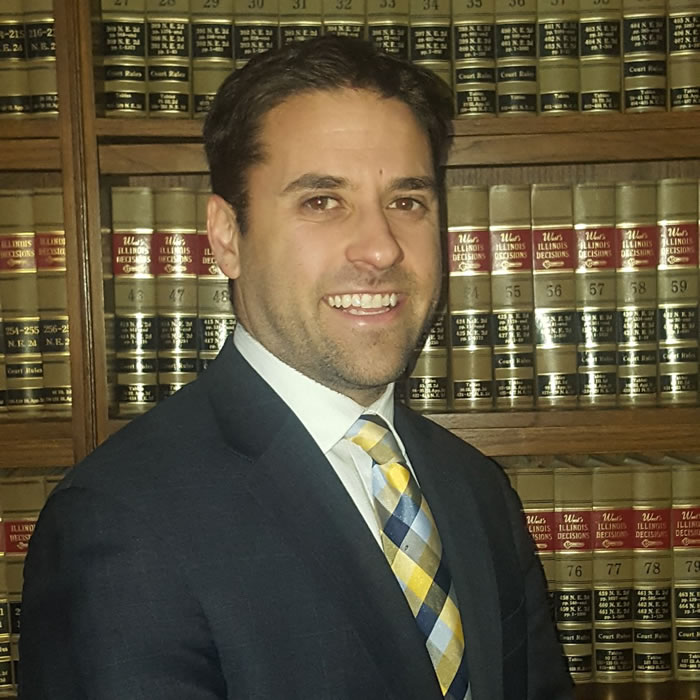
Daniel C. Katzman is a Partner at Katzman & Sugden, LLC and is licensed to practice law in Illinois and Missouri. Daniel was born and raised in Belleville, Illinois where his dad, Steven E. Katzman has had his law office for over 40 years. Daniel joined the law firm of Katzman & Sugden, LLC after receiving his J.D. from St. Louis University School of Law in 2011, where he earned certificates in Health Law and Employment Law. Prior to that, he received his undergraduate degree in Health: Science, Society & Policy from Brandeis University in Waltham, Massachusetts. Combining his background in health policy and law, Daniel focuses his practice on assisting clients who have been injured through no fault of their own. He is admitted to practice law in Illinois, Missouri, the United States District Court for the Southern District of Illinois, and the United States District Court for the Eastern District of Missouri.